Current Exhibitions

Arthur Heming: Chronicler of the North

April 21st, 2012 to July 8th, 2012

Ivey North and Centre Gallieries

The Wolf Hunter, Artwork for illustration in The Drama of the Forests, 1915, oil on canvas, 76.6 x 101.8 cm. Collection of the Royal Ontario Museum. Purchase made possible with the generous support of the Sir Joseph Flavelle Foundation.

This retrospective exhibition examines the career of celebrated artist, author and illustrator Arthur Heming (1870-1940). An avid northern explorer, his work helped to entrench perceptions of Canada as the "Great White North."

Many of Heming's paintings begin with naturalistic elements, which he exaggerated into wild, even surreal compositions intended to accentuate the "virtues" of Canada as a sort of snowy Eden, though one matter-of-factly described as full of hardship and death. This approach differed radically from that of his colleagues in the Group of Seven, who for decades set the very definition of Canadian art.

In his time Heming's exhibitions and books reached a large audience both in Canada and abroad. Although less well-known today, his work enjoys a large cult following, and he is remembered in the United States as an important member of a renowned artist colony at Old Lyme, Connecticut. This traveling exhibition will be accompanied by a comprehensive publication on Heming's life and work.

Sponsored by BlueStone Properties

The dates and times of all exhibitions are subject to change without notice.

Polar Shift

April 14th, 2012 to July 8th, 2012

Ivey South Gallery

Paul Walde, Snowball's Chance, 2011 snow in display freezer, Courtesy of the Artist

In its art, drama, history, literature, and popular culture, notions of Canada have been intrinsically linked to notions of the north, but with the imminent threat of global warming and globalization, traditional realities have begun to melt away. In their place, a new 'idea of north' is beginning to emerge.

The site of political, military, religious and, more recently, commercial colonization, Canada’s Arctic has long been a contested space. Since the early half of the twentieth century, the resettlement of Inuit people, the introduction of paternalistic government initiatives and assertions of political sovereignty over the region’s vast natural resources have unleashed an unprecedented reshaping of life and land in Canada’s Arctic.

Through the lens of contemporary art, Polar Shift examines the changing landscape of the High North. Featured are paintings and sculpture by former London-based artist Paul Walde, video by Inuk director Zacharius Kunuk and original drawings by Cape Dorset-based artist Annie Pootoogook.

Opening Reception: Friday, April 20, 2012 at 8:00 pm

The dates and times of all exhibitions are subject to change without notice.

Canadian Artists as Illustrators

April 7th, 2012 to July 22nd, 2012

Volunteer and Moore Galleries

C.W. Jefferys, Cutting Out Yonge Street (detail), watercolour on paper. Courtesy of the Anglo Boer War Museum.

Illustration in Canada began slowly, recording the geography and population of a fledgling country. As technologies improved, and as literacy grew, illustration flourished to meet a wide range of goals.

Illustration can be defined as imagery created to be reproduced, often with accompanying text, and can be more challenging to create than artwork produced exclusively from the artist’s imagination. Rather illustration comprises specific assignments, bound by deadlines, client demands, and the constraints of materials.

This exhibition focuses on imagery produced for consumption by the Canadian public from the late nineteenth century to the 1950s. During this period, illustration work supported many artists. Often derided as a lesser or "applied" field of expression, this exhibition celebrates illustration as an equally fruitful creative endeavour. It is a tremendous resource highlighting the talent and versatility of artists, the ways in which communities view themselves, and how society and culture changes.

The exhibition includes drawings and prints by Canadian artists such as Franklin Carmichael, J.E.H. MacDonald, Thoreau MacDonald, A.Y. Jackson, C.W. Jefferys, Clarence Gagnon, Clare Bice, and many others.

Opening Reception: Friday, April 20, 2012 at 8:00 pm

The dates and times of all exhibitions are subject to change without notice.

The Drawing Board: London's Illustrators

March 31st, 2012 to July 29th, 2012

Interior Gallery

Harold West, The Farmer's Advocate cover art, 1937 (detail)

By the second half of the nineteenth century, London, Ontario, had become a bustling centre for publishing with print and lithography shops springing up to fulfill the demand for reproducible art. Although large newspaper publishing companies had their own in-house artists, they also relied on the numerous commercial artists working for local firms.

Many of these commercial artists, particularly in the late nineteenth century, received their training through one of three avenues: limited public school instruction, studio lessons with professional artists, or study at the Mechanic’s Institute, which first introduced public art classes in 1871. From the latter grew the Western School of Art and Design, one of the first art schools in Ontario to teach both fine and applied art.

Working on set assignments and commissions, commercial artists helped to pave the way for the proliferation of chap books, pulp fiction, comic art, animation, and graphic design that would come to dominate the twentieth century. This exhibition includes print and lithography artifacts from the Museum's permanent collection, as well as original and reproduction magazine and commercial art, including that of London’s own Harold West, who worked for much of the twentieth century as an illustrator and comic artist.

Opening Reception: Friday, April 20, 2012 at 8:00 pm

The dates and times of all exhibitions are subject to change without notice.

Irene Avaalaaqiaq: Myth and Reality

March 24th, 2012 to July 1st, 2012

Forum Gallery

Irene Avaalaaqiaq, Human Love, 2002, wool duffle and felt, cotton embroidery thread. Private Collection. Irene Avaalaaqiaq, Husband and Wife, 1999 (detail), wool duffle and felt, cotton embroidery thread. Commissioned with funds raised by the Art Centre Volunteers, 1999, Macdonald Stewart Art Centre Collection

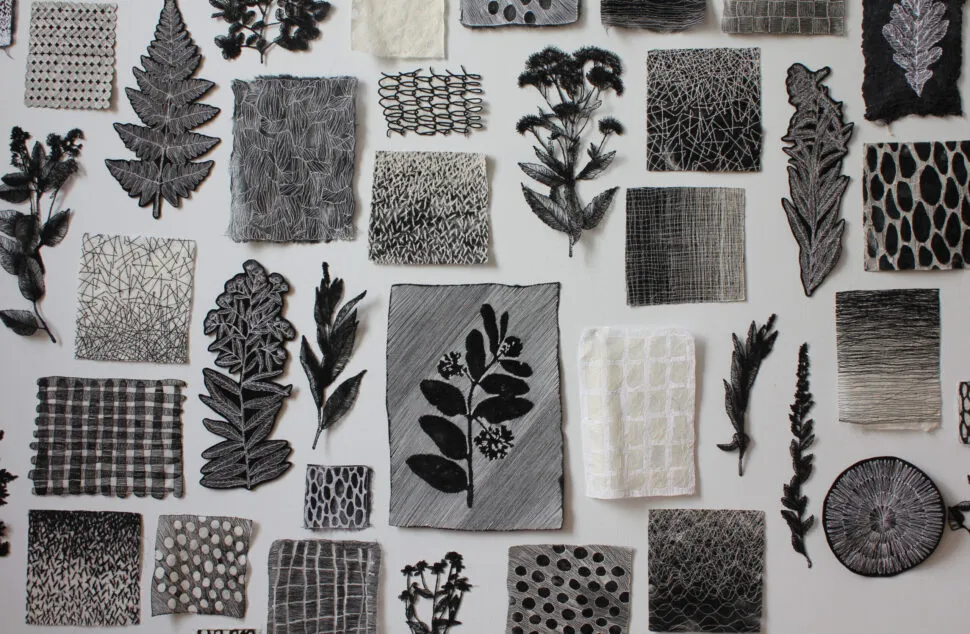
Irene Avaalaaqiaq has enjoyed a distinguished thirty-year career as one of Canada’s most prominent Inuit artists and a leading member of the prolific artistic community of Baker Lake, Nunavut. A creator of distinctive drawings, prints, and sculpture, she is best known for her remarkable wall hangings, which reveal a rich tradition of shamanistic imagery. Avaalaaqiaq also brings a highly individualistic vision to her tapestries. Her world view, derived from an oral tradition, is expressed by manipulating bold shapes in bright, contrasting colours against a solid background.

Born in the Kazan River area of Nunavut and orphaned at early age, Avaalaaqiaq spent the first years of her life in relative isolation, learning to sew caribou clothing from her grandmother. After moving to Baker Lake in 1958, she used this skill to create her celebrated wall hangings.

Organized and circulated by the Macdonald Stewart Art Centre, Myth and Reality is the first critical retrospective of Avaalaaqiaq's work. Here, exhibition curator Judith Nasby focuses on the artist’s life and art, as well as her commitment to preserving her heritage and making it accessible to an international audience. A catalogue accompanies the exhibition.

Opening Reception: Friday, April 20, 2012 at 8:00 pm

The dates and times of all exhibitions are subject to change without notice.

Janice Gurney: Credits (extended)

March 24th, 2012 to June 3rd, 2012

Centre Gallery

This installation by Toronto-based artist Janice Gurney features a series of 7 photographic panels arranged beneath a selection of works from the Museum's permanent collection. Gurney's panels, Credits and Credits (extended), feature the names of a network of actors that have become part of Gurney's working life as an artist in Canada for over thirty years. For this installation, Gurney included works by the artists in the collection of Museum London whose names are listed in Credits (extended). Some of these artists are closely connected with London: Greg Curnoe, Jamelie Hassan, Ron Benner, David Merritt, Patrick Mahon, Robert Fones and Arlene Stamp. Other artists in the collection are Andy Patton, Joanne Tod, Will Gorlitz, Micah Lexier, and Robert Flack. A larger network is thus formed, not only because of the connection these works have as parts of the Museum’s collection, but also as works made by artists who are connected to her.

Gurney was born in Winnipeg, Manitoba. She received a B.F.A. (honours) from the University of Manitoba in 1973 and a M.V.S. from the University of Toronto in 2007. Featured in solo and group exhibitions in venues across Canada, Gurney's work is held in the collections of the National Gallery of Canada (Ottawa); the Art Gallery of Ontario (Toronto); the Winnipeg Art Gallery (Winnipeg); and Museum London. Her work is represented by Wynick/Tuck Gallery (Toronto). Gurney is currently a Ph.D. candidate in Art and Visual Culture at Western University.

The dates and times of all exhibitions are subject to change without notice.

The River Thames

November 19th, 2011 to November 3rd, 2012

Community Gallery

In 1793, soon after Upper Canada had been established, Colonel John Graves Simcoe sketched a plan for a new London, assigning locations for several public buildings and designating a large reserve around the fork of the River Thames.

Development of the Fork was haphazard for most of the nineteenth century, but by 1900 a wide variety of activities began to flourish. For most Londoners at this time, the area was at the heart of numerous recreational activities as boaters, lawn bowlers and baseball fans flocked to its banks. After the discovery of a hot springs in the 1860s, London was a favoured vacation spa for wealthy tourists until the early twentieth century when a textile mill replaced the spa.

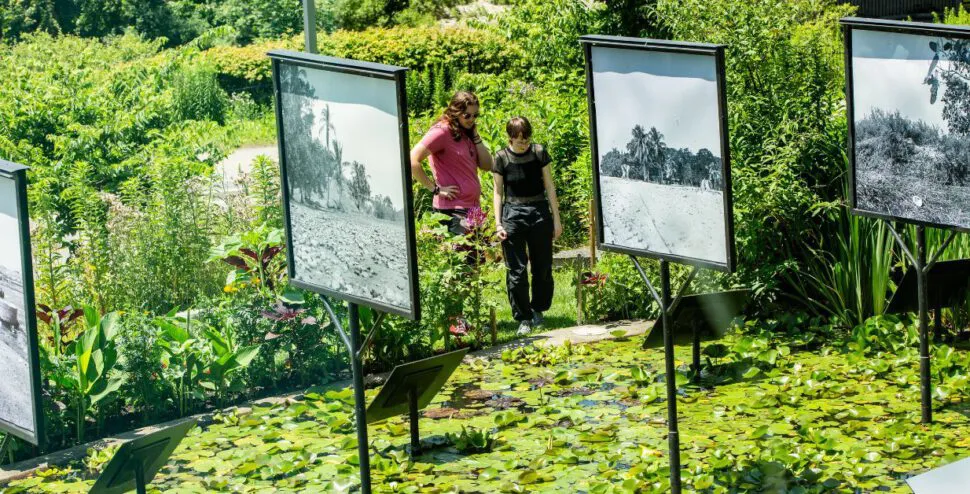
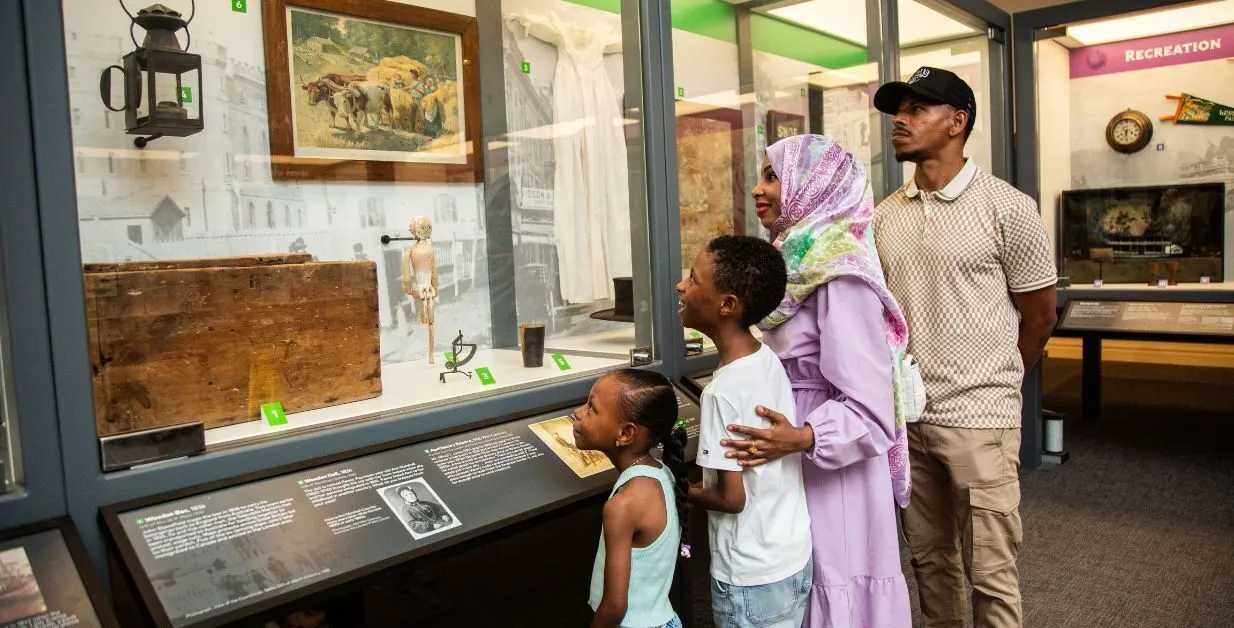
Through reproduction photographs, documentary panels, artifacts and original works of art, this exhibition examines the modern history of the River Thames, its role in the leisure and economic life of the region and the rivers sometimes devastating impact on the citizens of London.

The dates and times of all exhibitions are subject to change without notice.

The Drawing Room (Temporarily closed May 8 for approximately two weeks)

September 10th, 2011 to September 30th, 2012

Lawson Gallery

Horatio Walker (Canadian, 1858-1938), Boat Study for Unloading Hay, not dated, pencil on paper, 24 x 21.6 cm, Collection of Museum London, Purchased with funds from the Mitchell Bequest, 1958 Horatio Walker (Canadian, 1858-1938), Sheep Clipping and Dipping (detail), not dated, pencil on paper, 25 x 30.3 cm, Collection of Museum London, Purchased with funds from the Mitchell Bequest, 1958

Due to renovations, this exhibition will be temporarily closed Tuesday, May 8 for approximately two weeks.

This year-long exhibition explores drawing in Canadian art from its earliest uses to its role in contemporary culture. Over time the drawings on display will change, providing a wide array of selections from the collection. The Drawing Room will also progress chronologically, from historical content to contemporary works.

The first selection will surveys drawings made during the nineteenth and early twentieth centuries, a time when instructors emphasized drawing as the backbone of all artmaking. Only after years of formidable training drawing casts of classical sculpture, models and still life arrangements could a student branch out into other fields. Most, however, saw finished drawings as inferior to other forms. Instead, it was seen as a preliminary exercise, a step to something else, and to becoming a professional, a master.

Many of the works shown are therefore sketches, by Horatio Walker, James Wilson Morrice, F.S. Coburn and London’s own Albert Templar. They track an artist’s development and record ideas from the imagination to a finished work (usually a painting). The exhibition also includes portraits and landscapes by Marc-Aurele de Foy Suzor-Cote, Kate Taylor Cumming and Emily Carr.


  Bookmark on Delicious

 Share on Facebook

 Submit to Reddit